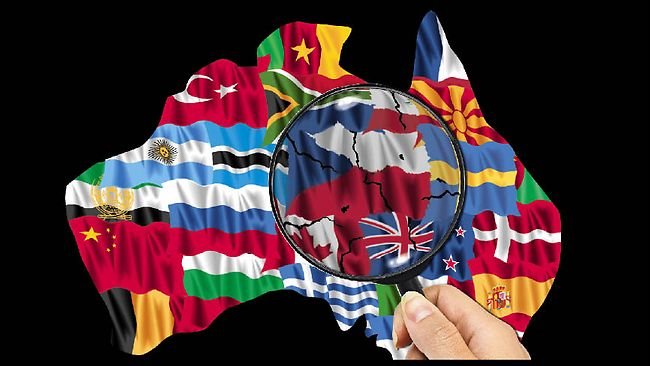
Each year on March 21, Australia marks Harmony Day.
Most organisations will acknowledge it. Some will celebrate it.
But very few will stop and ask the harder question:
Are we actually inclusive in how our organisation operates—especially at the leadership level?
Because Harmony Day isn’t just about diversity.
It’s about whether people genuinely feel they belong—and can progress.
Where Harmony Day Comes From
Harmony Day aligns with the United Nations International Day for the Elimination of Racial Discrimination.
It marks a moment in history that highlighted the consequences of systemic inequality—and the global commitment to address it.
In Australia, the day has been positioned more positively:
- celebrating cultural diversity
- promoting respect and inclusion
- reinforcing a sense of belonging
The message is simple:
Everyone belongs.
But belonging is not created by intention—it’s shaped by leadership, systems, and everyday behaviours.
Australia Today: Deeply Diverse
Australia is one of the most multicultural countries in the world:
- ~30% of Australians are born overseas
- ~50% have at least one parent born overseas
- Over 300 ancestries represented
- Over 300 languages spoken
- Nearly 1 in 5 Australians speak a language other than English at home
Diversity is not something we are building towards.
It’s already embedded in how the country—and our workplaces—operate.
The Business Case Is Clear
Diversity is not just a social initiative—it’s a performance driver.
- Organisations with higher diversity are ~35% more likely to outperform financially
- Inclusive teams are: 9–10x more likely to be innovative 8x better at collaboration and teamwork
- Diverse teams make better decisions up to 87% of the time
In a complex environment, better thinking leads to better outcomes.
The Gap: Diversity Without Representation in Leadership
Here’s where the disconnect becomes clear.
- Around 95% of senior leaders in Australia are from Anglo-Celtic or European backgrounds
- Only ~5–10% of ASX 200 CEOs come from non-European backgrounds
- Many organisations have 20–30%+ culturally diverse workforces, yet this drops to single digits at executive level
So while diversity exists across teams, it diminishes as seniority increases.
Diversity is visible in the workforce. Power and decision-making remain concentrated in a much narrower group.
The Broader Reality: Experience Still Doesn’t Match Representation
The leadership gap is only part of the picture.
Across Australia, many employees still don’t experience workplaces as inclusive or culturally safe.
- Around 1 in 5 Australians report experiencing racial discrimination
- Experiences of exclusion, bias, or “not fitting in” remain common
- Many employees feel: less comfortable speaking up pressure to adapt or “fit in” overlooked for opportunities or progression
This isn’t always overt.
It often shows up in subtle ways:
- whose ideas are heard
- who is included in informal networks
- who gets trusted with key opportunities
And this is where the real issue sits:
It’s not just about who is in the organisation. It’s about how people experience being there.
Because that experience directly impacts outcomes:
- Employees in inclusive environments are 10x more likely to be satisfied at work
- They are 4x more likely to experience positive mental health
When inclusion is missing:
- engagement drops
- performance is held back
- people either withdraw—or leave
Why This Matters (Commercially, Not Just Culturally)
This isn’t just about fairness. It’s about performance.
When leadership lacks diversity:
- decision-making becomes narrower
- blind spots increase
- innovation is limited
When people don’t feel included:
- they contribute less
- they disengage faster
- they leave sooner
And when talent is underutilised:
- productivity drops
- businesses fail to realise the full value of their workforce
Many organisations are focused on attracting talent.
Fewer are focused on fully leveraging and progressing it.
What Needs to Change
The challenge isn’t awareness.
It’s execution.
Most organisations:
- celebrate diversity
- talk about inclusion
- implement policies
But don’t change the systems that shape outcomes, including:
- how leaders make decisions
- how performance is assessed
- how opportunities are distributed
Practical Ways to Improve
If organisations want to move beyond intent, the focus needs to shift to action.
1. Build inclusive leadership capability
Leaders need to:
- actively seek different perspectives
- challenge bias in decision-making
- create space for contribution
2. Strengthen psychological safety
People need to feel safe to:
- speak up
- challenge thinking
- contribute ideas
Without this, diversity doesn’t translate into performance.
3. Review progression pathways
Look closely at:
- who gets promoted
- who gets access to development
- who is given visibility
If diversity drops at each level, it’s a system issue—not a pipeline issue.
4. Rethink hiring and onboarding
- Move away from “cultural fit”
- Hire for capability and perspective
- Support integration—not forced conformity
5. Measure what’s really happening
Most organisations don’t have clear insight into:
- inclusion
- psychological safety
- fairness of opportunity
What gets measured gets improved.
The Real Opportunity
Australia has already built a diverse workforce.
The opportunity now is to:
- reflect that diversity in leadership
- build systems that support it
- create environments where people can contribute fully
Because when diversity is matched with inclusion:
- teams perform better
- people stay longer
- organisations become more effective
Final Thought
Harmony Day shouldn’t just be a celebration.
It should be a checkpoint.
Not “Are we diverse?” But “Who gets heard, trusted, and promoted in our organisation?”
Because that’s where inclusion becomes real.
Leave a Reply